Author name: admin

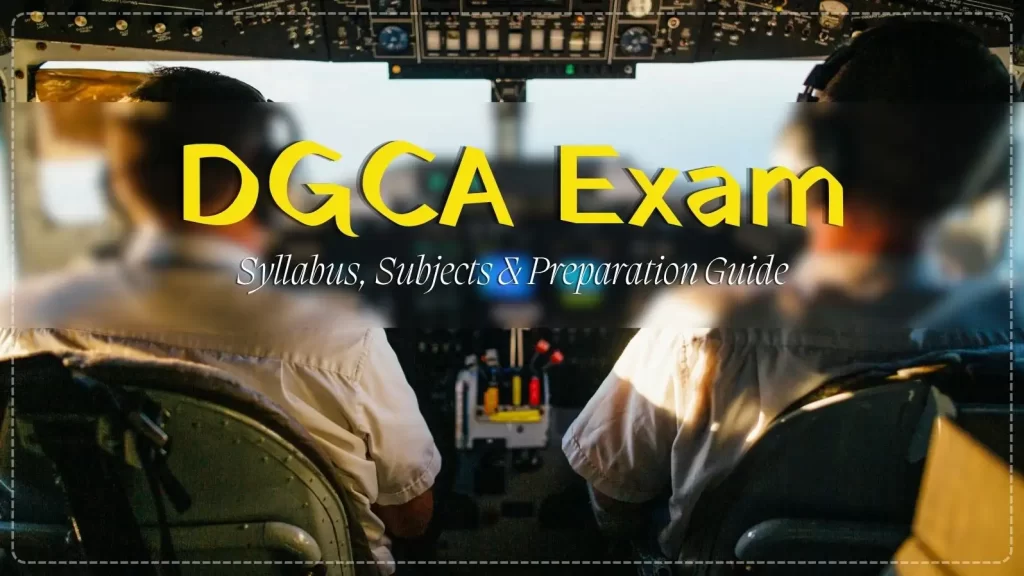
Looking for DGCA Exam details Discover the complete DGCA CPL syllabus, exam pattern, passing marks, subject-wise preparation tips, and eligibility criteria for 2026.

DGCA Exam 2026 – Complete Guide for Pilots

If you dream of becoming a commercial pilot in India, clearing the DGCA Exam is one of the most important steps in your aviation journey. Conducted by the Directorate General of Civil Aviation, these exams test your theoretical aviation knowledge before you can obtain a Commercial Pilot License (CPL). From Air Navigation and Meteorology to Aircraft Technical knowledge and Aviation Regulations, the DGCA exams ensure that every pilot understands the science, safety, and operational standards of aviation. Whether you are starting pilot training or preparing for your first DGCA attempt, this guide covers everything you need to know about the DGCA Exam and DGCA Exam Syllabus in 2026. What is the DGCA Exam? The DGCA Exam is a set of ground theory examinations required for obtaining a Commercial Pilot License (CPL) in India. These exams are conducted through the DGCA Pariksha Portal and are mandatory for aspiring airline pilots. The exams are designed to test a student’s understanding of: Even students who complete flying training abroad must clear DGCA ground exams to convert their license into an Indian CPL. DGCA Exam Highlights Particulars Details Conducting Authority DGCA India Exam Mode Online Computer-Based Test Exam Type Multiple Choice Questions (MCQs) Passing Marks 70% Negative Marking No Exam Frequency 4 Times a Year Validity of Subjects 5 Years Purpose Commercial Pilot License (CPL) DGCA Exam Eligibility To appear for DGCA Exams, candidates must fulfill the following eligibility criteria: Educational Qualification Candidates must complete 10+2 with Physics and Mathematics from a recognised board. Age Requirement Minimum age for CPL issuance is 18 years. Medical Fitness Candidates should possess a valid DGCA Class 1 Medical Certificate. Computer Number Students must obtain a DGCA Computer Number through the eGCA portal before registering for exams. DGCA Exam Syllabus 2026 The DGCA CPL syllabus consists of 6 major subjects. Each subject focuses on a different area of aviation knowledge. 1. Air Navigation Air Navigation is considered one of the toughest DGCA subjects because it involves calculations, flight planning, and navigation techniques. Topics Covered Difficulty Level Hard Recommended Books 2. Aviation Meteorology Meteorology teaches pilots about weather conditions and their effect on flight operations. Topics Covered Difficulty Level Moderate Recommended Books 3. Air Regulations This subject focuses on aviation laws and international aviation standards. Topics Covered Difficulty Level Moderate 4. Technical General Technical General covers aircraft systems and aerodynamics. Topics Covered Difficulty Level Very Hard Recommended Books 5. Technical Specific Technical Specific is based on the aircraft used during flying training. Topics Covered Difficulty Level Easy to Moderate 6. RTR(A) – Radio Telephony RTR(A) tests aviation communication skills. Topics Covered Exam Type DGCA Exam Pattern Feature Details Exam Mode Online Question Type MCQs Total Questions 50–100 Depending on Subject Passing Marks 70% Negative Marking No Exam Duration 2–3 Hours DGCA Exam Preparation Tips Follow a Study Plan Create a proper timetable for all subjects. Solve Mock Tests Practice previous year DGCA questions regularly. Focus on Navigation Air Navigation requires consistent numerical practice. Read DGCA CARs Air Regulations questions are often directly asked from DGCA CARs. Practice RTR Communication Speak RT phraseology aloud daily. Join a Ground School A professional ground school helps students understand difficult aviation concepts faster. Best DGCA Ground School in India Many aspiring pilots join professional aviation academies for structured preparation. Institutes like SPA Aviation provide: A proper mentorship system significantly improves first-attempt success rates Frequently Asked Questions (FAQs) Conclusion The DGCA Exam is the foundation of every commercial pilot’s career in India. With proper preparation, discipline, and guidance, students can successfully clear all DGCA subjects and move one step closer to becoming airline pilots. Understanding the complete DGCA Exam Syllabus helps students prepare strategically and focus on the subjects that require more practice. Start early, remain consistent, and follow a structured preparation plan to clear your DGCA exams confidently.
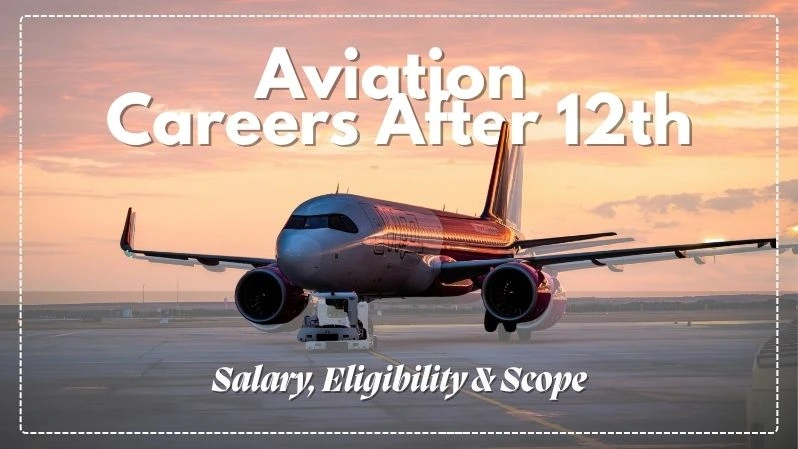
Top 10 Aviation Careers After 12th in India — Salary, Eligibility & Scope

Top 10 Aviation Careers After 12th in India — Salary, Eligibility & Scope

Every year, lakhs of students finish their 12th exams and dream of a career that is exciting, well paid, and takes them beyond their hometown. Aviation delivers all three and then some. Yet most students only think of becoming a pilot or an air hostess. The truth is, India’s aviation industry creates over 7.7 million jobs across more than a dozen career paths. With India set to become the third largest civil aviation market in the world by 2030, demand for trained aviation professionals has never been higher. The UDAN scheme alone has added 517 new routes and opened regional airports across 88 cities. New airlines like Akasa Air are expanding rapidly, while IndiGo and Air India are placing record aircraft orders. If you are a student who just passed 12th or a parent helping your child decide this guide covers every major aviation career you can pursue after 12th in India, with honest salary data, what the work actually involves, and what the career looks like 5 and 10 years from now 1. Commercial Pilot (CPL) Becoming a commercial pilot is the dream that brings most students to aviation. A commercial pilot flies passenger aircraft on domestic and international routes for airlines like IndiGo, Air India, SpiceJet, Akasa Air, and others. The role carries enormous responsibility and equally enormous rewards. What does the journey look like? You start with a Student Pilot License (SPL), progress to Private Pilot License (PPL), and then earn your Commercial Pilot License (CPL) after completing the required flight hours (200 hours minimum) and clearing all DGCA ground exams. Most pilots then get a type rating on a specific aircraft (like Airbus A320 or Boeing 737) before joining an airline as a First Officer. Eligibility12th with Physics & Mathematics, minimum 50% marks. Age: 17+ for PPL, 18+ for CPL. Valid DGCA Class 1 Medical Certificate required. Training Cost₹35 – ₹70 lakh for CPL in India. Training abroad (USA, Philippines, South Africa) ranges from ₹40 – ₹90 lakh total. Salary RangeFirst Officer (fresh): ₹1.5 – ₹2.5 lakh/month. Senior First Officer: ₹3 – ₹5 lakh/month. Captain: ₹5 – ₹8 lakh/month+. Growth PathStudent Pilot → First Officer → Senior First Officer → Captain → Chief Pilot / Training Captain 2. Cabin Crew / Air Hostess / Flight Steward Cabin crew professionals are the heart of every flight. They ensure passenger safety, deliver in flight service, manage emergencies, and represent the airline’s brand at every moment. This is also one of the most accessible aviation careers open to students from all streams (Science, Commerce, Arts) after 12th. Day to day responsibilities Cabin crew conduct pre flight safety checks, brief passengers on safety procedures, serve food and beverages, manage in flight emergencies, handle disruptive passengers, and ensure all passengers land safely. International cabin crew roles include extended layovers in global cities one of the most attractive perks of the job. Eligibility12th pass from any stream. Age: 17 – 27 years (varies by airline). Height: 155 – 165 cm+ with proportionate weight. Fluent English. No visible tattoos. Course DurationProfessional cabin crew diploma: 3 – 12 months. Airlines also provide internal training upon selection. SPA Aviation offers a structured program with airline placement support. Salary RangeDomestic cabin crew: ₹25,000 – ₹55,000/month. International crew: ₹60,000 – ₹1 lakh+/month. Senior Purser: ₹1 – ₹1.5 lakh/month. Growth PathJunior Cabin Crew → Senior Cabin Crew → Purser → Chief Purser / Cabin Crew Trainer / Inflight Manager 3. Aircraft Maintenance Engineer (AME) Aircraft Maintenance Engineers (AMEs) are responsible for inspecting, maintaining, repairing, and certifying aircraft as airworthy. No aircraft can fly without an AME signing it off. This makes AMEs one of the most in demand, well-paid technical professionals in the entire aviation ecosystem. AME licenses in India fall under two categories: B1 (Mechanical/Structural) and B2 (Avionics/Electrical), both regulated by DGCA under CAR – 66. Eligibility12th with Physics, Chemistry, and Mathematics (PCM), minimum 50% marks. AME course admission after 12th from DGCA approved institutes. Course & Licensing2 year AME course + 1 year apprenticeship + DGCA license exam. Full licensing takes 3 – 4 years post 12th. Salary RangeFresher AME: ₹40,000 – ₹70,000/month. Mid-level: ₹80,000 – ₹1.2 lakh/month. Senior AME/MRO: ₹1.5 – ₹2.5 lakh/month. Growth PathApprentice Engineer → Licensed AME → Senior AME → Quality Inspector → MRO Manager / Chief Inspector 4. Airport Ground Staff Ground staff professionals handle everything that happens on the ground to make a flight happen from passenger check-in and boarding to baggage handling, ramp operations, and gate management. With 80+ new airports under development in India, ground staff hiring is expected to grow significantly through 2030. Eligibility12th pass from any stream. Good communication skills in English. Age: 18 – 27 years. Customer service orientation is key. Key RolesCheck in Agent, Boarding Gate Agent, Ramp Agent, Baggage Handling, Passenger Services Agent, Airport Security Staff. Salary RangeEntry-level: ₹20,000 – ₹30,000/month. Senior ground staff: ₹35,000 – ₹50,000/month. Supervisors: ₹60,000+/month. Growth PathGround Staff Agent → Senior Agent → Supervisor → Airport Operations Manager → Station Manager 5. Air Traffic Controller (ATC) Air Traffic Controllers (ATCs) manage the safe, orderly, and efficient movement of aircraft in the sky and on the ground. They communicate with pilots, issue clearances, and prevent mid air collisions. In India, ATCs are primarily employed by the Airports Authority of India (AAI) a prestigious government job with exceptional pay and benefits. Eligibility12th with PCM (Physics, Chemistry, Maths), minimum 60% marks. Must clear AAI ATC recruitment exam + training at CATC Allahabad. Age: 18 – 27 years. Entry RouteAAI Junior Executive (ATC) recruitment via GATE or direct exam. Followed by 3 year training at Civil Aviation Training College (CATC), Allahabad. Salary RangeJunior Executive ATC: ₹60,000 – ₹80,000/month (IDA pay scale). Senior ATC: ₹1 – ₹1.5 lakh/month. Plus HRA, allowances, and pension. Growth PathJunior Executive → Executive → Senior ATC Officer → Deputy General Manager → GM (ATC) 6. Aviation Management / Airport Operations Manager Aviation Management covers the business, operations, and strategic side of running an airline or airport. This career

How to Become a Pilot in India Step by Step Guide

How to Become a Pilot in India | Step by Step Guide

Becoming a pilot in India is one of the most rewarding and most misunderstood — career decisions a student can make. With India’s aviation sector projected to be the third largest in the world by 2030, the demand for trained commercial pilots has never been higher. Airlines like IndiGo, Air India, and Akasa Air are hiring at record pace, and new routes are added every month. But for most students whether from science, commerce, or arts the path to the cockpit looks confusing. What exams do you clear? Which licence do you need first? How much does it cost? Can commerce students even become pilots? This guide answers every one of those questions clearly, accurately, and in the correct sequence. By the end, you will have a complete roadmap: from your 12th standard results to your Commercial Pilot Licence (CPL) and your first airline interview. How to Become a Pilot in India — Complete Roadmap If you have just completed Class 12 with science, commerce, or any stream here is the complete step-by-step process to becoming a commercial pilot in India. Step 1 — Confirm Educational Eligibility Science students with PCM: you are immediately eligible. Commerce or arts students: clear Physics and Mathematics via NIOS before proceeding. Do not skip this step no flying school can admit you without confirmed 10+2 PCM eligibility. Step 2 — Get Your DGCA Class 2 Medical Certificate Book an appointment with a DGCA Class 2 Aviation Medical Examiner (AME). The medical covers vision (corrected vision is accepted in many cases), hearing, blood pressure, ECG, and general physical fitness. A Class 2 Medical is required to apply to a flying school. Start this early some conditions take time to evaluate or treat. A failed medical at this stage stops the process before it begins. Step 3 — Choose a DGCA-Approved Flying Training Organisation (FTO) Select a DGCA approved FTO these are the only schools authorised to issue licences recognised by DGCA India. Key factors to evaluate: Step 4 — Obtain Student Pilot Licence (SPL) The SPL is your first official aviation document. To get it, you submit your Class 2 Medical, 10+2 PCM marksheets, passport size photos, and an application to DGCA through the eGCA portal. There is no written exam for the SPL it is issued on document verification. With an SPL, you can begin flying with a certified instructor. Step 5 — Complete Ground School Ground school covers the theoretical knowledge required for DGCA written exams. There are 5 DGCA theory subjects you must clear: Additionally: English Language Proficiency (ELP) assessment and RTR(A) (Radio Telephony Restricted Aeronautical) licence for radio communications. Ground school typically runs for 6 to 8 months alongside flight training. Step 6 — Earn Your Private Pilot Licence (PPL) The PPL is the intermediate licence between SPL and CPL. Requirements: minimum 40 flying hours dual and solo, pass PPL written exam, pass PPL skill test with a DGCA examiner. The PPL allows you to fly as pilot-in-command in non-commercial operations. Most students complete their PPL within 3 to 5 months of beginning flight training Step 7 — Build Flying Hours Toward CPL (200 Hours Minimum) For a DGCA CPL, you must log a minimum of 200 flying hours. The 200 hours must include: Flying Requirement Minimum Hours What It Covers Total flying hours 200 hours All combined flying including dual and solo Pilot-in-command (solo) hours 100 hours Hours you fly alone as commander Cross-country flying 20 hours solo Navigation flights away from home airport Night flying 10 hours Flying in low light/night conditions Instrument flying (IFR) As required for IR Flying using instruments only, no visual reference Hour-building is the longest and most variable part of the training. In India, delays due to monsoon weather, aircraft grounding, and scheduling backlogs are common. Students training in the USA or other international locations often complete 200 hours significantly faster due to better flying-day consistency. Step 8 — Clear All 5 DGCA Theory Exams DGCA theory exams are computer-based and conducted at DGCA-authorised exam centres. You can appear for each subject separately. Passing marks: 70% in each subject. Maximum attempts: unlimited (but delays cost time and money). Most students complete all 5 exams within 8 to 14 months with proper ground school preparation and coaching. Step 9 — Obtain Instrument Rating (IR) The Instrument Rating (IR) is a mandatory add-on to the CPL that certifies you to fly in low-visibility conditions using instruments only. IR training is conducted in actual aircraft and/or approved simulators. It requires additional flying hours specific to IFR (Instrument Flight Rules) operations. The IR is a prerequisite for airline operations no commercial airline will hire a pilot without it Step 10 — Pass the DGCA CPL Skill Test After logging 200+ hours and passing all 5 theory exams, you apply for the CPL Skill Test a practical flying exam conducted by a DGCA authorised examiner. The skill test evaluates: pre flight planning and aircraft checks, takeoffs, landings, and general aircraft handling, navigation exercises, emergency procedure handling, and instrument flying proficiency. Pass this test and you are awarded your Commercial Pilot Licence (CPL). Step 11 — Apply for CPL Through DGCA eGCA Portal Submit your CPL application through the DGCA eGCA online portal (dgca.gov.in). Required documents: SPL, PPL, flight logbooks (verified by FTO), DGCA theory exam pass certificates, Class 1 Medical Certificate, RTR(A) licence, ELP certificate, passport, and photographs. DGCA processes CPL applications typically within 30 to 90 days depending on current workload. Step 12 — Complete Type Rating for Airline Joining A CPL alone does not qualify you to fly a commercial aircraft you also need a Type Rating. A Type Rating is aircraft specific training (e.g., Airbus A320 Type Rating or Boeing 737 Type Rating) that certifies you to operate that particular aircraft in commercial operations. Type Ratings cost approximately ₹20 to ₹35 lakhs additionally and take 2 to 3 months. Most airlines either require candidates to hold a Type Rating before applying, or they provide the

Scroll to Top